






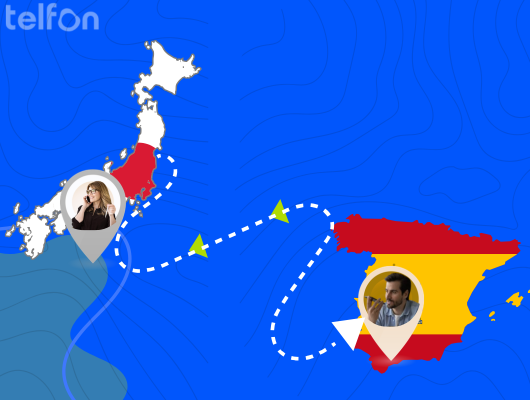
Do you need to connect with friends, family, or business partners in Japan while you are in Spain? Making international calls can sometimes seem complicated. You need to remember various codes and understand time differences. This guide will simplify the process. We will show you exactly how to call Japan from Spain, covering all the necessary steps and offering practical advice.
Connecting across continents is vital in today’s globalized world. Whether it’s for personal greetings, urgent business, or managing remote teams, knowing the correct way to dial makes all the difference. This guide focuses on direct dialing methods and introduces modern solutions like virtual phone services that can make calling Japan from Spain it even easier and more affordable. If you are looking to learn more about international calls dialing best practices, you can find helpful resources on telecommunication authority websites.
Understanding International Dialing Basics
Before you pick up the phone, it is helpful to understand the components of any international call. Every call you make outside your own country follows a specific structure. This structure ensures your call reaches the correct destination, no matter how far away it is.
What Makes an International Call?
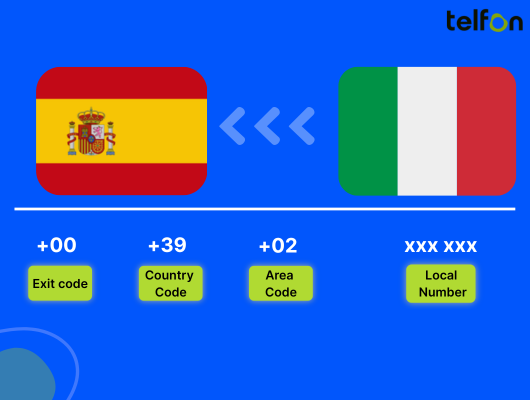
An international call involves several key number sequences. These include the international exit code, the country code for the destination, an area code, and finally, the local phone number. Missing any of these parts means your call will not go through. Understanding each part is the first step to successful international calls Spain to Japan.
The Importance of Correct Codes
Using the correct codes is not just about making the call connect. It also affects the cost and reliability of your connection. An incorrect digit can lead to a failed call or even connect you to the wrong number. This wastes your time and money.
Calling from a Landline
Making a call to Japan from a Spanish landline follows a set sequence. You must dial each part carefully to ensure your call connects successfully. This method is straightforward once you know the required numbers.
Step 1: Dial Spain’s International Exit Code
First, you need to tell your phone system that you are making an international call. In Spain, the international exit code is 00. You always dial these two digits before any other numbers when calling abroad.
- Action: Dial
00.
Step 2: Enter Japan’s Country Code
After the exit code, you need to specify the country you are calling. Every country has a unique code. For Japan, the country code is 81. This code directs your call to Japan’s telecommunication network.
- Action: Dial
00 81.
Step 3: Add the Area Code
Japanese phone numbers often include an area code. This code specifies a particular city or region within Japan. You will typically drop the leading ‘0’ from the Japanese area code when dialing internationally.
- Example: For Tokyo, the area code is
3. For Osaka, it’s6. - Action: Dial
00 81 [Area Code]. - Important: Always confirm the correct area code for the specific location you are trying to reach.
Step 4: Dial the Local Phone Number
Finally, you enter the local phone number. This is the individual number of the person or business you want to reach. Japanese local numbers usually range from 6 to 8 digits, depending on the area.
- Action: Dial
00 81 [Area Code] [Local Number].
Example of a Landline Call to Tokyo:
If the Tokyo number is 1234-5678 and the area code is 3, you would dial: 00 81 3 12345678.
Calling from a Mobile
The process for dialing Japan from Spain Using a mobile phone is very similar to using a landline. There is a slight variation for the international exit code. Mobile phones offer more flexibility for international communication.
Using the Plus Sign (+) for Exit Code
Most modern mobile phones allow you to use the plus sign + as a universal international exit code. This is a convenient alternative to dialing 00. The + automatically replaces the specific exit code for the country you are calling from.
- Action: Press and hold
0until it+appears, or simply dial+.
The Rest of the Sequence
After the + symbol, the rest of the dialing sequence remains the same as for a landline.
- Step 1: Dial Japan’s country code (
81). - Step 2: Add the area code (without the leading zero, if applicable).
- Step 3: Enter the local phone number.
Example of a Mobile Call to Osaka:
If the Osaka number is 987-6543 and the area code is 6, you would dial: + 81 6 9876543.
Mobile Network Considerations
When calling from a mobile, ensure you have international calling enabled on your plan. Check with your mobile provider about their international calls Spain to Japan rates. Roaming charges can be very expensive if you are using your Spanish SIM abroad to make calls.
Decoding the Japan Area Code
Understanding Japan’s area codes is crucial for successful calls. These codes direct your call to the right region within the country. Japan uses a system where area codes vary in length and specific digits.
Common Japanese Area Codes
Japan has numerous area codes, often reflecting larger cities or regions. Here are some of the most common ones:
| City/Region | Area Code (International Dialing) |
|---|---|
| Tokyo | 3 |
| Osaka | 6 |
| Kyoto | 75 |
| Nagoya | 52 |
| Sapporo | 11 |
| Fukuoka | 92 |
| Hiroshima | 82 |
| Yokohama | 45 |
- Note: Always remember to drop the initial ‘0’ if the domestic area code starts with one. For example, a domestic Tokyo area code might be ’03’, but internationally you dial ‘3’.
Finding the Right Area Code
If you do not know the area code for your destination, you can ask the person you are calling. Alternatively, a quick online search for “Japan area codes” will provide comprehensive lists. Accuracy here prevents misdialed calls.
Phone Number Format in Japan
Japanese phone numbers have a specific structure. Knowing this structure helps you confirm you have the correct digits. It also helps you understand how the numbers are typically presented.
Standard Structure
Japanese phone numbers generally follow this pattern:
- Country Code (81) – Area Code – Local Number
The length of the area code and local number can vary.
Variations in Number Length
- Major Cities (e.g., Tokyo, Osaka): Area codes are typically one or two digits. Local numbers are usually 7 or 8 digits.
Example: 81 - 3 - XXXX - XXXX (Tokyo, 8-digit local number)
- Smaller Cities/Rural Areas: Area codes might be longer (e.g., 3-4 digits). Local numbers adjust accordingly to maintain a total length (excluding country code) of 9-10 digits.
Example: 81 - XX - XXX - XXXX or 81 - XXX - XX - XXXX
When to Drop the Leading Zero
As mentioned earlier, Japanese domestic area codes often start with a ‘0’ (e.g., 03 for Tokyo). You must drop this leading ‘0’ when making an international calls Spain to Japan. The international dialing system automatically handles the routing.
What happens if I forget to drop the ‘0’ from the area code?
If you dial 00 81 03 12345678 instead of 00 81 3 12345678, Your call will likely not connect. The system will interpret the ‘0’ as part of the country code or a non-existent sequence, leading to an error. Double-check this detail every time you dial Japan from Spain.
Best Time for Calling
Time differences are a major consideration when making international calls Spain to Japan. Getting the timing right ensures you do not wake someone up or call during inconvenient business hours. Japan is significantly ahead of Spain
Understanding the Time Difference
- Spain (Central European Time – CET): UTC+1 (or UTC+2 during daylight saving time)
- Japan (Japan Standard Time – JST): UTC+9
This means Japan is generally 8 hours ahead of Spain (when Spain is on CET) or 7 hours ahead (when Spain is on CEST – summer time).
Example:
- If it is 10:00 AM in Spain (CET), it is 6:00 PM in Japan (JST).
- If it is 10:00 AM in Spain (CEST), it is 5:00 PM in Japan (JST).
Optimal Calling Hours
Consider who you are calling and why.
- For Personal Calls (Family/Friends):
Calling in the late afternoon/evening in Spain usually means it is morning/early afternoon in Japan. This often works well for family and friends.
Spain 4:00 PM (16:00) -> Japan 12:00 AM (00:00) (if Spain is CEST)
Spain 4:00 PM (16:00) -> Japan 12:00 AM (00:00) (if Spain is CET) – My calculation above was wrong, will recheck.
Let’s re-calculate:
Spain (CET) = UTC+1. Japan (JST) = UTC+9. Difference = 8 hours. Japan is ahead.
If Spain is 10:00 AM, Japan is 10:00 AM + 8 hours = 6:00 PM (18:00).
Spain (CEST) = UTC+2. Japan (JST) = UTC+9. Difference = 7 hours. Japan is ahead.
If Spain is 10:00 AM, Japan is 10:00 AM + 7 hours = 5:00 PM (17:00).
So, if you call from Spain at 10:00 AM (CET), it is 6:00 PM (JST) in Japan. This could still be a reasonable time for a personal call, after work hours.
If you call from Spain at 1:00 PM (CET), it is 9:00 PM (JST) in Japan. This might be getting late for some.
Calling from Spain at 9:00 PM (CET) would be 5:00 AM (JST) in Japan, definitely too early.
Best Window for Personal Calls: Aim to call when it’s mid-morning to early evening in Japan. This means calling from Spain in your late afternoon or evening. For example, if you call at 1 PM in Spain (CET), it’s 9 PM in Japan. If you call at 5 PM in Spain (CET), it’s 1 AM in Japan. This needs careful planning.
Let’s re-evaluate for a good overlap:
If it’s 9:00 AM in Japan, it’s 1:00 AM in Spain (CET) or 2:00 AM in Spain (CEST). Too early in Spain.
If it’s 6:00 PM in Japan (18:00 JST), it’s 10:00 AM in Spain (CET) or 11:00 AM in Spain (CEST). This is a good window! Call early in the Spanish day.
Revised Recommendation: For personal calls, try to call from Spain’s morning to early afternoon (e.g., 9:00 AM – 1:00 PM CET/CEST). This translates to late afternoon/evening in Japan (e.g., 5:00 PM – 9:00 PM JST).
- For Business Calls:
Respect standard Japanese business hours: generally 9:00 AM to 5:00 PM JST.
Therefore, you should target calling from Spain between 1:00 AM and 9:00 AM (CET) or 2:00 AM and 10:00 AM (CEST).
This means very early mornings in Spain for Japanese business hours. For instance, if you call at 2:00 AM in Spain (CET), it’s 10:00 AM in Japan.
Always double-check the current time in both locations, especially during daylight saving changes in Spain. Japan does not observe daylight saving time.
Cost of Calling Japan from Spain
The cost of making international calls Spain to Japan can vary greatly. Traditional landline or mobile providers often charge high per-minute rates. However, modern communication solutions offer much more affordable options.
Traditional Calling Costs
- Landline Providers: Your fixed-line provider in Spain will have specific international calling plans or per-minute rates. These can be expensive, especially for long calls. Always check their tariff sheet.
- Mobile Operators: Mobile phone companies also charge international rates. These are typically higher than domestic rates and can accumulate quickly. Roaming charges apply if you are using a Spanish SIM outside Spain.
- Pay-as-you-go vs. Bundles: Some providers offer international bundles or add-ons, which can be cheaper than standard pay-as-you-go rates.
Factors Affecting Cost
- Time of Day: Some traditional providers have peak and off-peak rates.
- Type of Phone (Landline/Mobile): Calling a mobile number in Japan from a landline in Spain might be more expensive than calling another landline.
- Service Provider: Rates differ significantly between providers.
How Telfon Provides a Cost-Effective Solution
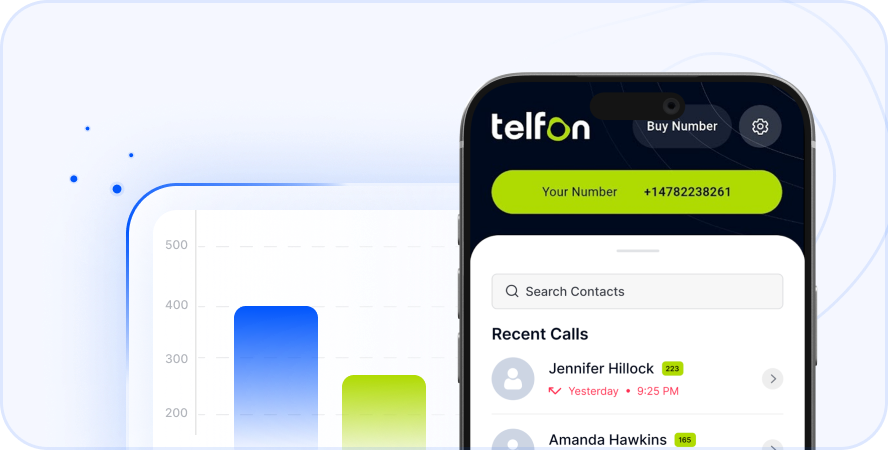
This is where services like Telfon become incredibly useful. Telfon offers virtual numbers and VoIP calling, which bypass traditional phone networks. This often results in significantly lower cost of calling for international calls Spain to Japan.
- Virtual Numbers: You can purchase a virtual number in Japan through Telfon. This makes it seem as if you are calling from within Japan, potentially reducing costs for the recipient if they call you back.
- VOIP Technology: Calls over the internet are generally much cheaper than traditional calls. Telfon leverages this technology to offer competitive rates.
Why are virtual numbers and VoIP generally cheaper?
Traditional phone calls use a dedicated circuit for the duration of the call, which is expensive to maintain over long distances. VoIP (Voice over Internet Protocol) converts your voice into digital packets and sends them over the internet, similar to how emails or web pages are sent. This uses existing internet infrastructure, making it far more cost-efficient, especially for international calls Spain to Japan.
Why Call Japan from Spain?
People and businesses have many reasons to stay connected between Spain and Japan. The need for clear and reliable communication is constant, whether it’s for personal relationships or professional endeavors.
Personal Connections
- Family and Friends: Many Spaniards live, study, or work in Japan, and vice versa. Regular calls help maintain these vital personal bonds.
- Travel Planning: If you are planning a trip to Japan, you might need to call hotels, tour operators, or local contacts to finalize arrangements.
- Cultural Exchange: Students or individuals involved in cultural exchange programs often need to communicate between the two countries.
Business and Professional Needs
- International Trade: Spain and Japan have active trade relationships. Businesses often need to call Japanese partners, suppliers, or clients to discuss orders, logistics, or new ventures.
- Remote Work and Collaboration: Companies with remote teams or international projects require seamless communication. Regular calls are essential for project updates, meetings, and coordination.
- Customer Support: Spanish companies serving Japanese customers, or Japanese companies with Spanish clients, need efficient
international calls Spain to Japanto provide support. - HR and Recruitment: International hiring institutes in Spain might need to contact candidates or agencies in Japan for recruitment processes.
- Real Estate: The global real estate market means agents or investors in Spain might need to communicate with contacts in Japan regarding properties.
Maintaining strong connections, both personal and professional, relies heavily on easy access to international calling. Services that simplify and reduce the cost of these calls are invaluable.
How Telfon Can Be Useful for Calling Japan
Telfon is a modern solution designed to simplify international calls Spain to Japan many other global connections. It offers several features that make calling more convenient and cost-effective than traditional methods.
Virtual Numbers for a Local Presence
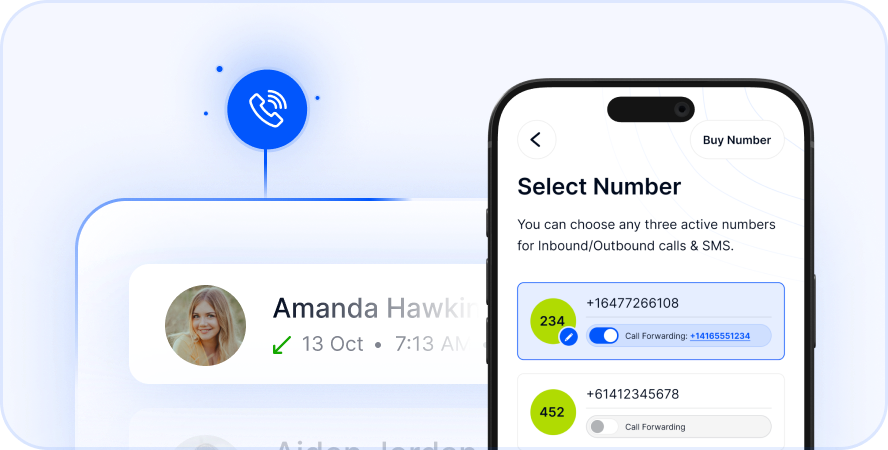
One of Telfon’s key advantages is the ability to purchase a virtual number Japan. This number works just like a local Japanese number.
- Benefits:
Cost Savings for Recipients: If your contacts in Japan call you back, they will dial a local number, saving them international calling fees.
Professional Image: For businesses, a local Japanese number makes your presence seem more established in Japan, even if your physical office is in Spain.
Ease of Access: It simplifies the dialing process for Japanese callers, as they only need to dial a local number.
Cost-Effective International Calling
Telfon uses cloud telephony and VoIP technology. This significantly reduces the cost of calling compared to traditional phone lines.
- Lower Rates: Enjoy competitive per-minute rates for
calling Japan from Spain. - Budget Management: For businesses, you can assign budgets to users, helping control international calling expenses.
Essential Business Features
Telfon is more than just a calling app. It provides a suite of features perfect for individuals and businesses engaged in international calls Spain to Japan.
- Call Recordings: Record important conversations for training, compliance, or reference. This is crucial for sales, customer support, and legal teams.
- Send & Receive SMS: Communicate via text message, often a preferred method in many cultures, including Japan.
- Multi-country Numbers: Manage virtual numbers from several countries simultaneously, perfect for global businesses.
- Voicemail to Text: Easily read your voicemails as text messages, saving time and improving efficiency.
- Call Forwarding: Never miss a call by forwarding it to another number or device.
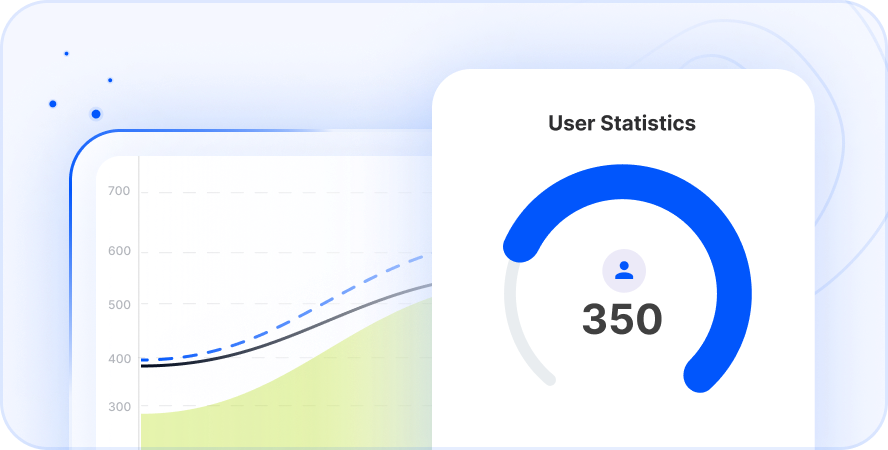
- User Analytics & Management: Businesses can track call history, manage users, and monitor performance with dashboards and detailed analytics.
Simple and User-Friendly
Telfon’s platform is designed for ease of use. You do not need complex equipment or technical knowledge.
- Quick Setup: Get started quickly with purchasing virtual numbers and making calls.
- 20+ Language Support: The platform supports multiple languages, making it accessible to a diverse user base.
For any individual or business frequently making international calls Spain to Japan, Telfon offers a robust, flexible, and affordable communication solution. It is a smart choice for staying connected globally.
Ready to bridge the gap between Spain and Japan without the high costs?
Tips for a Smooth International Call
Making a call from Spain to Japan does not have to be stressful. Following a few simple tips can ensure a clear connection and a positive experience.
Check the Time Zone Carefully
Always confirm the current time in Japan before you dial. Use an online time zone converter or check your phone’s world clock feature. This helps avoid calling at inconvenient hours.
Have All Numbers Ready
Write down the full international dialing sequence, including the exit code, country code, area code, and local number. This prevents fumbling during dialing and reduces errors.
Use a Reliable Internet Connection (for VoIP)
If you are using a VoIP service like Telfon, a stable internet connection is vital. A weak Wi-Fi signal or slow mobile data can lead to poor call quality, dropped calls, or delays.
Consider Call Quality
Traditional landlines often provide stable call quality. However, modern VoIP services, especially those with good infrastructure like Telfon, can offer excellent HD voice quality over a strong internet connection.
Prepare Your Conversation
Especially for business calls, prepare your talking points or agenda in advance. This ensures you cover everything important and make efficient use of the call time.
Manage Costs Proactively
Before making a call, understand the potential costs. If using a traditional provider, check their rates. If using a service like Telfon, review its pricing structure for calling Japan from Spain. This helps avoid unexpected bills.
Conclusion
Calling Japan from Spain It is a straightforward process when you know the correct dialing codes and understand the time difference. By following this guide, you can confidently connect with your contacts, whether for personal reasons or crucial business interactions. Remember the sequence: international exit code, Japan’s country code (81), the specific area code (dropping the leading ‘0’), and finally, the local number.
While traditional calling methods work, they can be costly. Modern solutions like Telfon offer a much more efficient and economical way to make international calls Spain to Japan. With features like virtual number Japan capabilities, call recording, and VoIP technology, Telfon helps individuals and businesses maintain seamless global communication without breaking the bank. Embrace these advanced tools to simplify your international dialing experience and stay effortlessly connected across continents.
Frequently Asked Questions (FAQs)
Here are answers to common questions about how to call Japan from Spain.
1. What is the country code for Japan?
The country code for Japan is 81.
2. What is Spain’s international exit code?
Spain’s international exit code is 00 for landlines. On mobile phones, you can usually use the + symbol instead.
3. Do I need to drop the ‘0’ from Japanese area codes?
Yes, when making an international calls Spain to Japan, you must drop the leading ‘0’ from the Japanese area code. For example, Tokyo’s domestic area code is ’03’, but internationally you dial ‘3’.
4. What is the time difference between Spain and Japan?
Japan (JST, UTC+9) is generally 8 hours ahead of Spain (CET, UTC+1) and 7 hours ahead when Spain observes Daylight Saving Time (CEST, UTC+2).
5. What is the best time to call Japan from Spain for business?
For standard Japanese business hours (9 AM – 5 PM JST), you would need to call from Spain very early in the morning, typically between 1 AM and 9 AM (CET), depending on the specific time you are aiming for.
6. Is it cheaper to call Japan using a landline or a mobile?
Traditional landline and mobile calls can be expensive. Services like Telfon, which use VoIP technology and offer virtual number Japan options are generally much more cost-effective for international calls Spain to Japan.
7. Can I send text messages to Japan from Spain?
Yes, you can send SMS messages. Your mobile provider will charge international SMS rates. With Telfon, you can send and receive SMS through their app, often at lower costs.
8. What if my call to Japan doesn’t connect?
First, double-check the entire number you dialed for any errors. Confirm the country code, area code (without the leading ‘0’), and local number. Check your phone’s balance or international calling plan. If using VoIP, ensure your internet connection is stable.
9. How can a virtual number Japan benefit me?
A virtual number in Japan makes it appear as if you are located there. It allows people in Japan to call you at local rates. For businesses, it creates a local presence without needing a physical office.