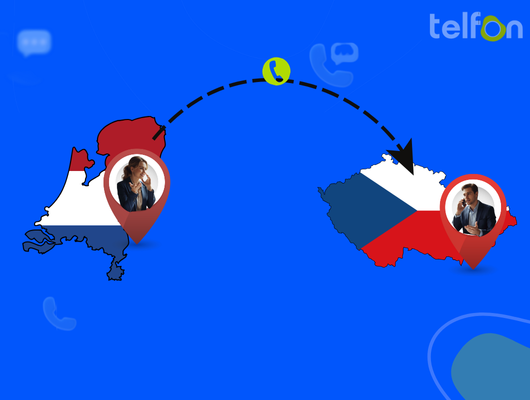







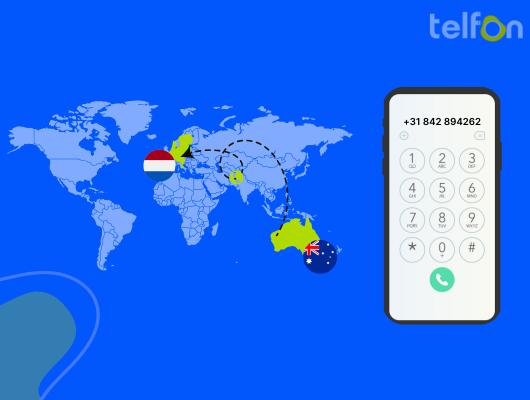
Connecting with friends or business partners in the Netherlands should be exciting. Yet, international dialing rules often cause unnecessary stress. You might worry about expensive rates or waking someone up at 3 AM. This guide simplifies the entire process for you. We break down the exact steps to ensure your calls connect instantly.
Navigating global phone networks requires a bit of knowledge. Once you learn the format, it becomes second nature. It does not matter if you are closing a deal in Amsterdam. Perhaps you are chatting with relatives in Utrecht. Knowing the right codes saves you time. For accurate scheduling, always check a reliable source like Time and Date to track current time differences.
You will also discover modern tools to lower costs. Traditional carriers often charge high fees for these calls. Modern apps like Telfon offer a smarter alternative. We will explore how to make calling the Netherlands from Australia affordable.
Understanding the Basics of International Calls
Before you pick up the phone, you must understand the numbers. Every international call follows a strict formula. This sequence acts like a digital map for your call. It guides the signal from Australia to the specific Dutch household.
There are three main parts to this sequence. First, you need an exit code to leave the Australian network. Second, you need a country code to enter the Netherlands. Finally, you dial the local number. Mastering these components ensures your international calls connect every time.
The Role of Exit and Country Codes
Australia’s exit code is crucial. It tells your local carrier that you are dialing internationally. Without it, the network assumes you are making a local call. The standard exit code for Australia is 0011. You must dial this first if you are using a landline.
The Netherlands has a specific digital address. This is known as the country code. The code for the Netherlands is 31. This number directs your call specifically to Dutch telecom providers. You will dial this immediately after the exit code.
Step-by-Step Guide: Calling from a Landline
Landlines require the traditional dialing format. This is the most common method for office phones. The process is manual but reliable. Follow these steps to reach a Dutch landline.
- Dial the Exit Code: Pick up the receiver and dial 0011.
- Enter the Country Code: Next, input 31. This targets the Netherlands.
- Dial the Area Code: Enter the city code. Important: Drop the leading ‘0’. If the code is 020, just dial 20.
- Enter the Local Number: Finally, dial the subscriber’s phone number.
Example: To call an Amsterdam landline (020 123 4567), dial: 0011 31 20 123 4567.
Step-by-Step Guide: Calling from a Mobile Phone
Mobile phones offer a quicker way to dial internationally. The standardized GSM network simplifies the exit code. You do not need to remember 0011.
- Use the Plus Symbol: Long-press the 0 key. Wait until a + appears on the screen.
- Enter Country Code: Dial 31.
- Add Area or Mobile Code: Enter the city code or mobile prefix. Again, drop the leading ‘0’.
- Dial the Number: Finish with the remaining digits.
Example: To call a Dutch mobile (06 9876 5432), dial: +31 6 9876 5432.
Critical Rule: Dropping the Leading Zero
This is the most common mistake people make. Dutch phone numbers always include a ‘0’ at the start locally. This applies to both landline area codes and mobile prefixes. However, the international system does not use this zero.
When you dial from Australia, you must remove that first digit. For instance, the Rotterdam area code is 010. Internationally, it is just 10. If you leave the zero in, the call will fail. Always check the number format before pressing the call button.
Netherlands Area Codes List
| City | Domestic Code | Dial This (from Aus) |
|---|---|---|
| Amsterdam | 020 | 20 |
| Rotterdam | 010 | 10 |
| The Hague | 070 | 70 |
| Utrecht | 030 | 30 |
| Eindhoven | 040 | 40 |
| Groningen | 050 | 50 |
| Maastricht | 043 | 43 |
| Arnhem | 026 | 26 |
| Haarlem | 023 | 23 |
Keep this table handy. It ensures you route your call to the right city. If your contact is in a smaller town, a quick search will reveal the local code.
Understanding Dutch Phone Number Structures
Recognizing the length of a number helps you spot errors. Dutch numbers follow a strict digit count. This helps you verify if you have the correct information before dialing.
Landline Formats
Landlines usually have 9 digits in total locally. This includes the area code. When dialing internationally, the count changes slightly because you drop the zero.
- Domestic: 0XX XXXXXXX (e.g., 020 1234567).
- International: +31 XX XXXXXXX.
You drop the ‘0’, so you dial 9 digits after the country code.
Mobile Number Formats
Mobile numbers connect to people, not places. They do not use geographic area codes. All Dutch mobile numbers start with the same prefix.
- Prefix: They all start with 06 domestically.
- Format: 06 XXXXXXXX (10 digits total).
- International: +31 6 XXXXXXXX.
You dial ‘6’ followed by the 8 unique subscriber digits.
Select Number
Navigating Time Zone Differences
Timing is everything for international calls. The Netherlands is significantly behind Australia in time. Calling at the wrong hour is unprofessional and intrusive. You must calculate the gap carefully.
The Netherlands uses Central European Time (CET). Australia uses several zones, primarily Australian Eastern Standard Time (AEST). The difference ranges from 8 to 10 hours.
Best Times to Call in Summer
During the Australian summer, Daylight Saving Time is in effect. This widens the time gap. Sydney can be 10 hours ahead of Amsterdam.
- Best Window: 5:00 PM – 9:00 PM (Sydney time).
- Result: This is 7:00 AM – 11:00 AM in the Netherlands.
Best Times to Call in Winter
In the Australian winter, the gap narrows slightly. The Netherlands moves to Summer time, and Australia moves to standard time. The gap becomes roughly 8 hours.
- Best Window: 4:00 PM – 8:00 PM (Sydney time).
- Advice: Always avoid calling in the Australian morning. It will likely be the middle of the night for your Dutch contacts.
The High Cost of Traditional Calling
Calling the Netherlands via standard carriers is expensive. Traditional telecom providers charge high rates for international direct dialing (IDD). You might pay connection fees plus a high rate per minute.
Hidden Costs of Roaming
Using your Australian mobile SIM to call directly adds up fast. A 30-minute business call could cost you over $50 AUD. It depends on your plan. Many providers exclude European countries from “unlimited” caps.
This expense forces people to keep calls short. It limits your ability to connect deeply with family. It also hinders negotiating properly with clients. Fortunately, cloud telephony changes this landscape completely.
How Telfon Transforms International Calling
Telfon offers a smarter way to connect. It is a cloud-based phone system designed for modern communication. It bypasses expensive traditional networks. You get clear audio and low rates using just your internet connection.
This tool is perfect for both personal use and business growth. You do not need new hardware. You simply download the app or use the web interface. It makes cheap calls from Australia to the Netherlands a reality for everyone.
Why Choose Telfon?
- Massive Savings: Save up to 50% compared to standard carriers.
- Pay-As-You-Go: No lock-in contracts. You only pay for what you use.
- Global Reach: Connect to over 180 countries, not just the Netherlands.
- High Quality: VoIP technology ensures your voice sounds crisp and clear.
Get a Virtual Number for the Netherlands
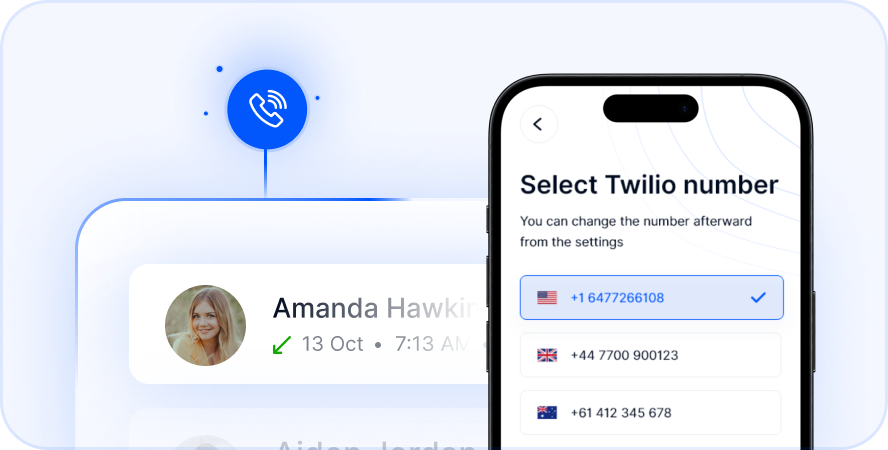
One of Telfon’s most powerful features is the virtual number. You can purchase a genuine Dutch phone number while living in Australia. This is a game-changer for businesses and expats.
When you call from this number, your contact sees a local Dutch ID. They are far more likely to answer a local call than an unknown international one. Furthermore, they can call you back at local rates. You effectively establish a local presence without leaving your desk in Sydney or Melbourne.
Advanced Features for Business Growth
Telfon is not just for casual chats. It acts as a robust business phone system. Companies expanding into Europe rely on these tools daily. Real estate agents, recruiters, and sales teams use Telfon to manage global workflows.
Essential Business Tools
- Call Recording: Automatically record calls for training or compliance.
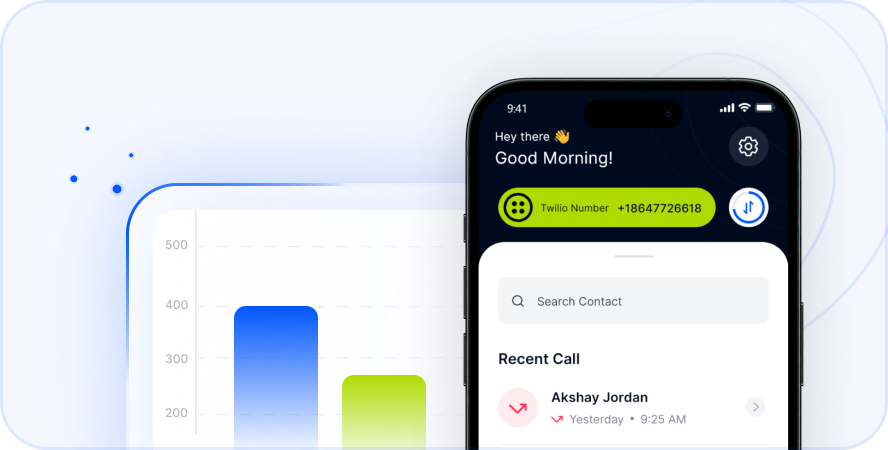
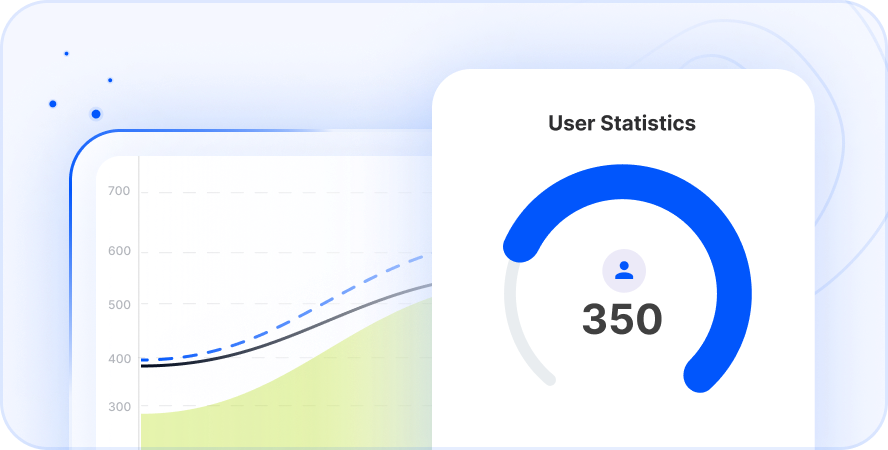
- Analytics Dashboard: Track call duration, costs, and user activity with detailed charts.
- CRM Integration: Log interactions seamlessly.
- Multi-User Management: Assign numbers and budgets to different employees.
These features provide the oversight needed to run a remote team efficiently. You maintain professionalism regardless of your physical location.
Leveraging WhatsApp and SMS
Modern communication is not limited to voice. Telfon integrates WhatsApp and SMS capabilities directly. You can manage multiple WhatsApp accounts through the platform.
- Broadcast Messages: Send updates to multiple Dutch clients at once.
- Official Presence: Use your virtual Dutch number for WhatsApp Business.
- Bulk SMS: Run marketing campaigns effectively.
This multi-channel approach ensures you never miss a connection. You can text a candidate to schedule a call, then switch to voice seamlessly.
Use Cases: Who Needs to Call the Netherlands?
The connection between Australia and the Netherlands is strong. Thousands of people bridge this distance daily. Understanding why people call helps clarify which tools are best.
Personal Connections
Many Australians have Dutch heritage. Grandparents, cousins, and friends live across the ocean. Regular calls keep these bonds alive. Using Telfon ensures you can talk for hours without worrying about the bill. It makes catching up on birthdays and holidays stress-free.
Business Expansion
The Netherlands is a major European trade hub. Australian companies dial Dutch numbers for many reasons.
- Recruitment: Interviewing candidates for remote roles.
- Logistics: Coordinating shipments through Rotterdam.
- Sales: Pitching services to new European markets.
- Support: Helping Dutch customers with product issues.
Reliable communication is the backbone of these operations. A dropped call or poor line quality can cost you a contract.
Troubleshooting Common Connection Issues
Sometimes calls fail despite your best efforts. Understanding common technical glitches saves frustration. Most issues originate from simple formatting errors or network settings.
Check Your Line Permissions
First, ensure your Australian plan allows international dialing. Some carriers block IDD by default to prevent fraud. You may need to contact support to unlock this feature. If you use Telfon, this is enabled automatically.
Verify the Number Format
Re-read the number you dialed. Did you forget the exit code? Did you accidentally leave the ‘0’ in the area code? These are the top reasons for failed connections.
Internet Stability for VoIP
If you use an app like Telfon, check your data. A weak Wi-Fi signal can cause dropped calls. Switch to 4G or 5G if your home internet is unstable. VoIP requires a steady stream of data for clear audio.
Dutch Business Etiquette for Callers
Calling for business requires cultural awareness. The Dutch value directness and punctuality. Knowing a few etiquette rules can improve your professional relationship.
Be Direct and Punctual
Do not spend too much time on small talk. Dutch professionals prefer to get straight to the point. State the purpose of your call early. Also, call exactly when you said you would. Lateness is considered disrespectful.
Language Barriers
Most Dutch professionals speak excellent English. However, it is polite to ask first. A simple “Do you speak English?” sets a respectful tone. It shows you do not assume everyone accommodates you.
Start Calling Smarter: Join Telfon Today
Summary of Key Takeaways
Calling the Netherlands from Australia is easy with the right knowledge. Here is a quick summary of what you need to remember.
- Dial Correctly: Start with 0011 (landline) or + (mobile), then 31.
- Drop the Zero: Always remove the first ‘0’ from the area code or mobile prefix.
- Check Time Zones: The Netherlands is 8–10 hours behind. Call in the Australian evening.
- Avoid High Costs: Traditional carriers are expensive. Use VoIP solutions.
- Use Telfon: It provides virtual numbers, recording, and up to 50% savings.
Frequently Asked Questions (FAQs)
Q1: What is the best time to call the Netherlands from Australia?
The best time is usually in the Australian evening. If you call between 5:00 PM and 9:00 PM AEST, it will be morning in the Netherlands (around 8:00 AM to 12:00 PM). This ensures you catch people during their waking hours.
Q2: How much does it cost to call the Netherlands from an Australian mobile?
Standard mobile rates can be very high. They often exceed $1.50 per minute depending on your carrier. However, using a VoIP app like Telfon can reduce this cost significantly. You can often save up to 50% on per-minute rates.
Q3: Why is my call to the Netherlands not connecting?
The most common error is dialing the leading zero. Ensure you dropped the ‘0’ from the city code or mobile prefix. Also, check that you started with +31 or 0011 31. If the number is correct, check your internet connection or carrier permissions.
Q4: Can I have a Dutch phone number while living in Australia?
Yes, you can. Apps like Telfon allow you to buy a “virtual number.” This gives you a valid +31 phone number. People in the Netherlands can call you on this number at local rates. It rings directly on your device in Australia.
Q5: Do I need to dial an area code for Dutch mobile numbers?
No, Dutch mobile numbers do not use geographic area codes like cities do. They all start with the prefix ’06’. When dialing from Australia, you simply dial +31 followed by the number 6, and then the remaining 8 digits.